
2026-07-27
Why Info Tags Trump Floor Plans for Finishes
Did you know? Interactive labels in 3D tours communicate material details faster and clearer than traditional floor plan legends.
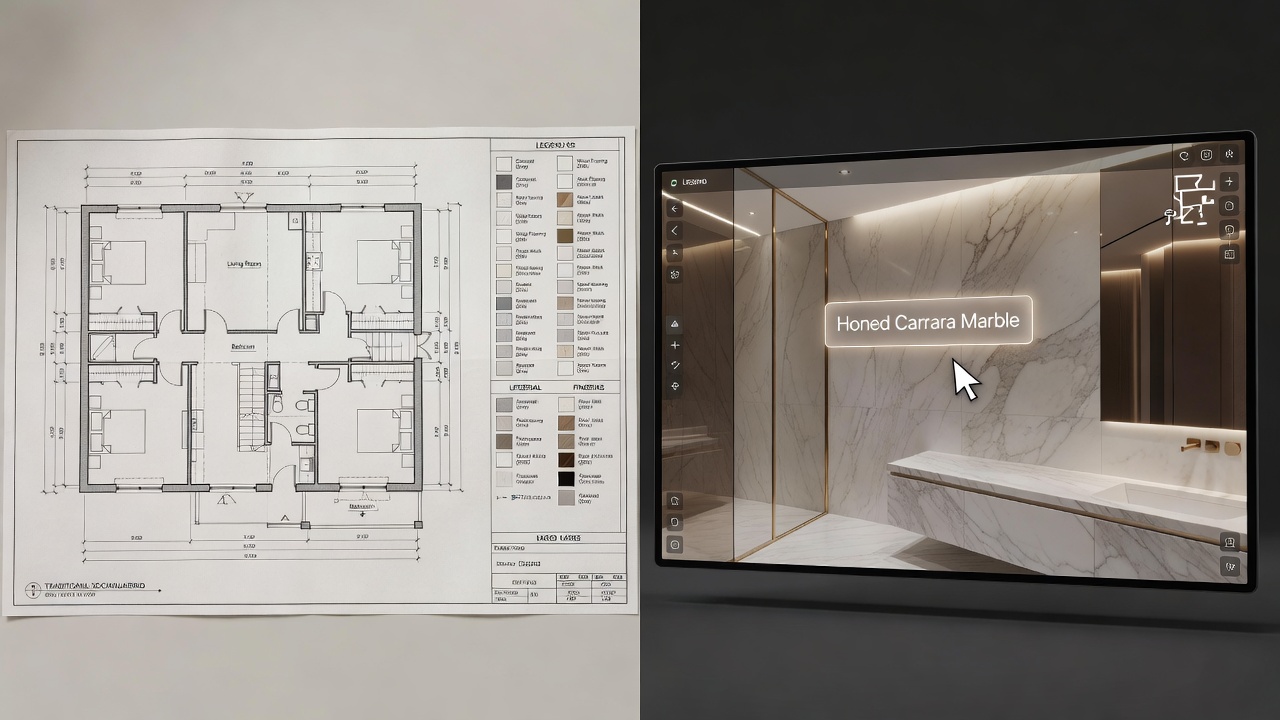
When developers and architects present pre-construction properties, they face a familiar challenge: how do you convey material specifications—marble vs. engineered stone, matte vs. polished finishes, paint colors, fixtures—in a way buyers actually understand? Floor plans with tiny legend boxes have been the standard for decades. But there's a better way, and it's already transforming how properties are sold before the first brick is laid.
Interactive info tags embedded directly in 3D tours let prospective buyers click on a surface and instantly see what it is. Instead of cross-referencing a color-coded floor plan with a legend, a buyer walks through a virtual kitchen, hovers over the countertop, and reads: "Carrara marble, honed finish." They tap the backsplash: "Subway tile, matte glaze." No confusion. No guesswork. The finish information lives in context, exactly where it matters.
Why This Matters for Your Sales Process
Floor plans are excellent for spatial layout and dimensions. But they're terrible at showing *character*. A prospective buyer might love a penthouse on paper, then feel disappointed in person because they didn't grasp how the finishes would look or feel. With annotated 3D tours, you're building understanding and confidence before site visits—reducing surprises, accelerating decisions, and filtering for genuinely aligned buyers. It's also a huge time-saver for your sales team: fewer questions like "what color is the tile again?"
The best part? This approach works whether you're selling luxury condos, commercial mixed-use, or boutique residential developments. As more buyers expect interactive digital experiences before signing a contract, having polished, informative 3D tours with embedded finish details isn't a luxury feature—it's becoming table stakes. And it starts with rethinking how you label what buyers see.